
Iowa Arrest Records: The Public Rule
Plenty of Iowa arrest and booking records are public. That word does not oblige an agency to post everything online, though. Iowa Code Chapter 22 grants the right to inspect, copy, and share records a government body already holds, unless an exception applies. The law reaches what exists. It cannot force a sheriff to write a new report, run a custom search, explain a case, or keep files for a fixed number of years. Who holds each item shapes the trail. A county sheriff or jail keeps the booking sheet and photo, while the arresting agency holds its own incident report. The Iowa State Patrol posts selected enforcement news, and the court docket, which lists case filings and actions, holds dispositions. For prison custody or supervision, the Iowa DOC Offender Search is the tool, though it does not track county bookings. None of these sources replaces another.
Start with the receiving county for current custody. The court docket answers a disposition question. For the incident report, contact the arresting agency. A state arrest can still end in a county booking, which is why a news release and a jail record may each describe one part of the same event.
Did Iowa Pass a Booking-Photo Removal Law?
Iowa has no enacted statute aimed at private booking-photo publication. Nothing in Iowa Code Chapter 22 sets a removal deadline or bans fees for taking a photo down. The state's operating rules remain the open-records law, its exceptions, juvenile confidentiality, court orders, and the expungement statutes. Posting a photo online is one question. Asking that custodian for a record is another. House File 2309 never became law. As a proposal, it would have made booking photographs confidential by default, with narrow exceptions such as a judge's order or the need to find a fugitive. Its text illustrates the policy fight. It created no present right to demand removal. No Iowa court ruling treats that proposed section as enacted law either. Under Chapter 22, anyone can request an existing record. It can be done in person, by phone, in writing, or electronically. No reason is required. A strong request names the agency, the record type, and an approximate date. It should also cover the person or event and the preferred format. A custodian may release a record with redactions or withhold protected parts, including material tied to an active investigation, a protected witness, or another law. Ask for any nonconfidential portions and the specific basis for any denial. A custodian is simply the office keeping the record. A redaction hides a detail the office cannot legally release. Iowa has no single online-photo rule. A sheriff may keep a booking image without adding it to any roster. A missing image does not mean no record exists. A third-party copy does not mean an agency must publish one. Note: An image held by an Iowa agency and an image displayed on a public roster are separate access questions.
Iowa Arrest Records: Request Path
Requests succeed when they ask for a record, not for an answer nobody documented. Name the likely holder first. The county jail may hold the booking register and photo. The arresting agency may hold the incident report. The clerk holds court filings and dispositions. Chapter 22 creates no statewide jail-booking database. No agency must build a custom list from scattered files. One state-level example is the Iowa Department of Public Safety's open-records route. DPS does not charge for the first three hours of labor. The first three attorney hours are free too. Actual hourly costs apply after that. Advance payment can be requested when an estimate tops $250. Those are DPS practices alone. They are not a fee schedule binding every county sheriff or court clerk. The DPS request page lists the agency's email and fee terms. County fees and response timing vary. Do not carry this schedule over to a local jail.
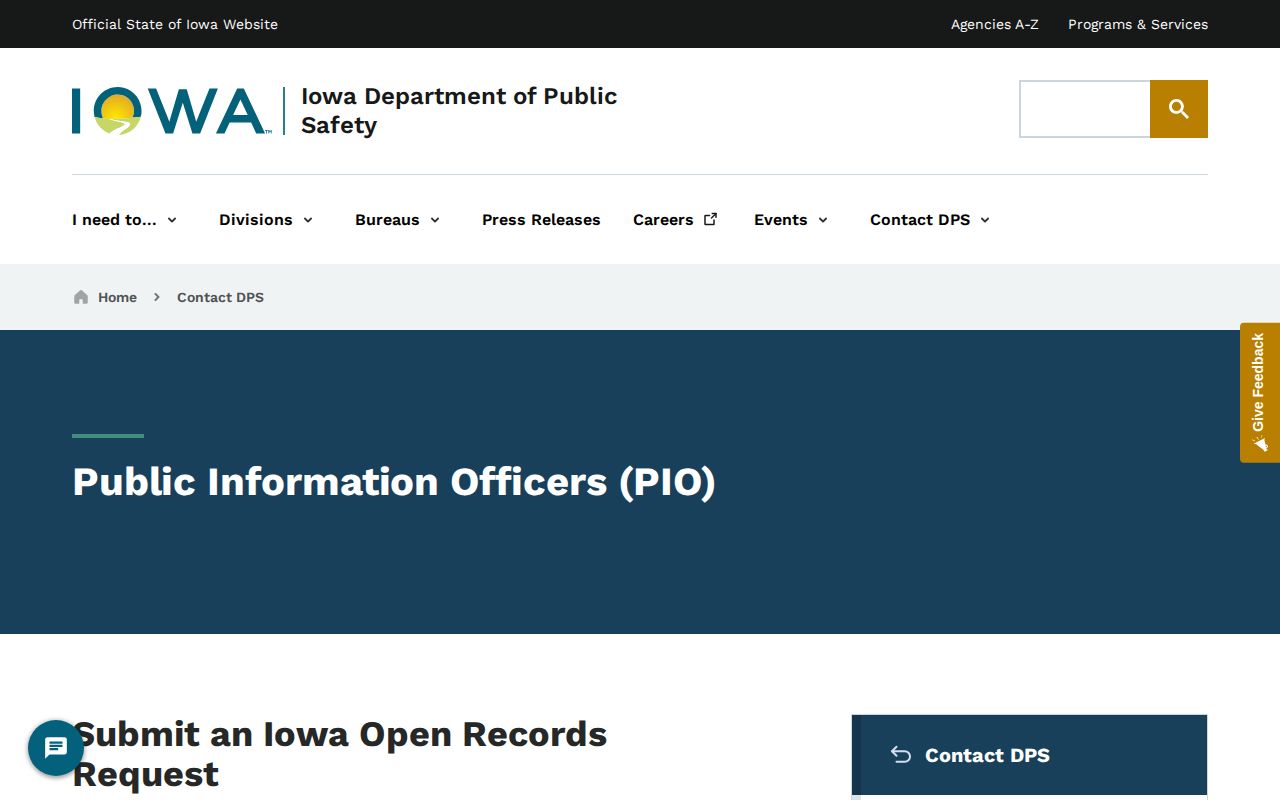
Ask for an estimate. Ask for a likely production date. Also request copying costs, planned redactions, and the legal basis for any withholding. Broad requests take longer. Prompt handling at one office sets no deadline everywhere else. Use the Iowa County Directory to find the county that received the booking. The statewide photo landscape shows where official booking images may appear.
- Identify the record and likely custodian, such as the receiving county jail, arresting police agency, or clerk of court.
- Give the person's name, date range, event or case detail, and the record type sought. Ask for an electronic copy when that format works.
- Request an estimate and a reason for any redaction or denial. Narrow the date or record type if the first search is too broad.
- Keep the response and any court disposition with the record so later correction requests can point to official proof.
Which Iowa Records Stay Confidential
Not every Iowa record is open to inspection. Juvenile court and social files usually stay closed under Chapter 232. The protection depends on the child's status, the kind of proceeding, and any court order. It is not a blanket rule. The custodian must weigh each document against the governing section.
Police files raise separate concerns. They may hold investigative material, victim or witness details, medical facts, personal identifiers, or data shielded by another statute. Such a record can still be released in part. The agency simply strips the protected portions first. Request the segregable parts and a written explanation of whatever gets withheld.
Online searching has its own limits. A jail roster shows current custody, not released people. A case portal tracks court events, not bookings. A state offender record reflects a later custody or supervision stage. Match the source to the question, whether that means a fresh arrest, an older police record, a court result, or state custody.
Iowa Expungement Has Separate Paths
Expungement works through a court order. It changes official access to the record. It does not erase every jail, police, news, search-engine, or private copy at once. Iowa offers two distinct paths. The two routes carry different rules. The date, the offense, and payment status all matter. Use the court's current form, and ask the clerk or a lawyer about a specific case.
Under section 901C.2, some public offenses qualify after acquittal or dismissal, payment of required financial obligations, and a waiting period generally described as 180 days. A court may allow an earlier petition for good cause. The statute carries exclusions and case-specific conditions. Once granted, the order makes covered records confidential, though authorized agencies may retain access.
Section 901C.3 handles certain misdemeanor convictions. The general rule demands more than eight years since conviction, no pending criminal charge, and payment of court costs, fees, fines, and restitution. Listed offenses are excluded, including OWI under section 321J.2. Prior deferred judgments add their own limits. The Iowa Judicial Branch form categories help match a filing to the right path rather than treating every arrest alike.
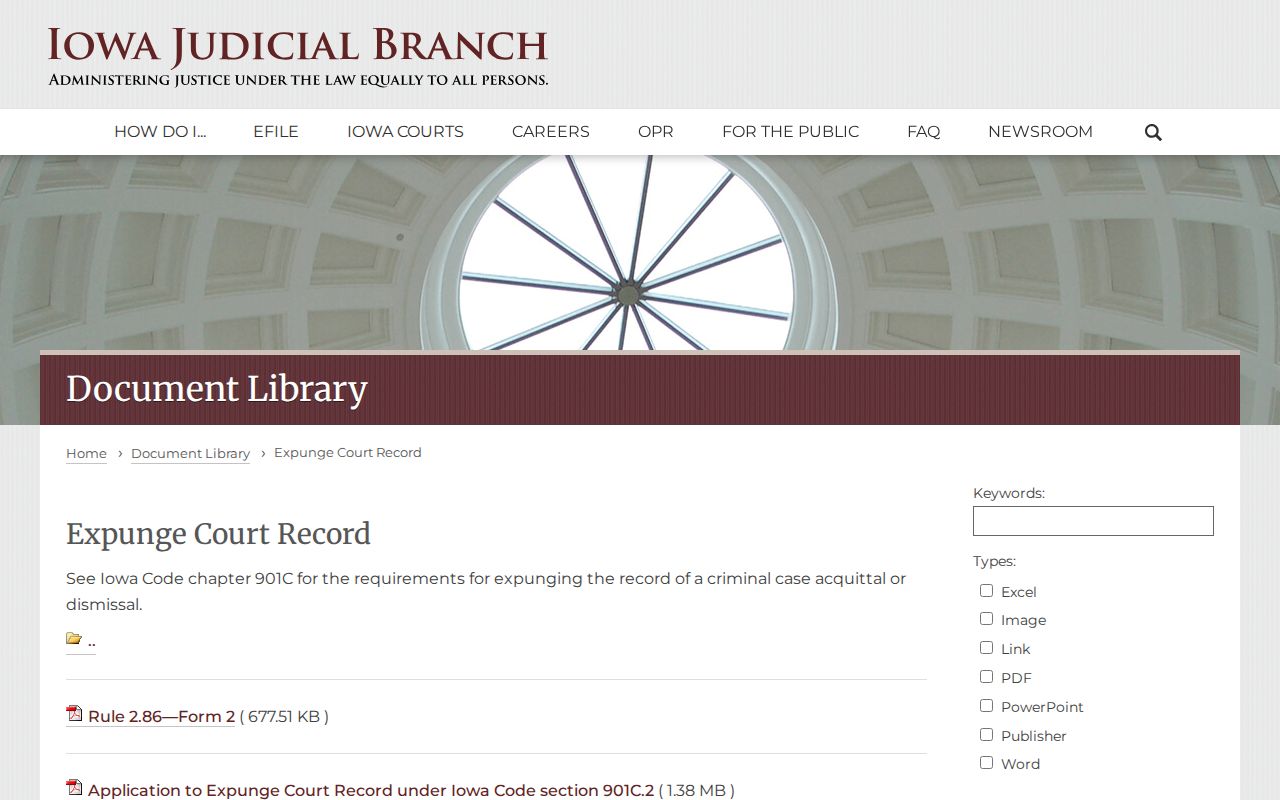
Use the signed order or final disposition elsewhere. It can change what courts release. It cannot force every private publisher to drop an old copy on demand.
| Record status | What the path can change | Key limit |
|---|---|---|
| Acquittal or dismissal | May support relief under the applicable Iowa expungement section. | Waiting periods, payments, exclusions, and court review still apply. |
| Eligible misdemeanor conviction | May qualify for a separate petition under section 901C.3. | More than eight years, no pending charge, payment, and offense limits are part of the general rule. |
| Private or stale copy | A documented correction request can ask a publisher or search engine to update its copy. | A court order does not automatically delete every outside copy. |
Note: Confirm eligibility against the current Iowa statute and the person's own case file before making any filing with a court clerk.
Correct Iowa Records Across Systems
Start with an official case result when a record looks wrong. Then ask the owning agency to fix it. Wrong names, dates, charges, and dispositions can all be corrected. A custodian's file, a roster page, and a search result update on different schedules. Keep whatever backs up the correction, such as a response, court order, or disposition.
Chapter 22 sets no single retention period. The state records manual shows schedules varying by record series.
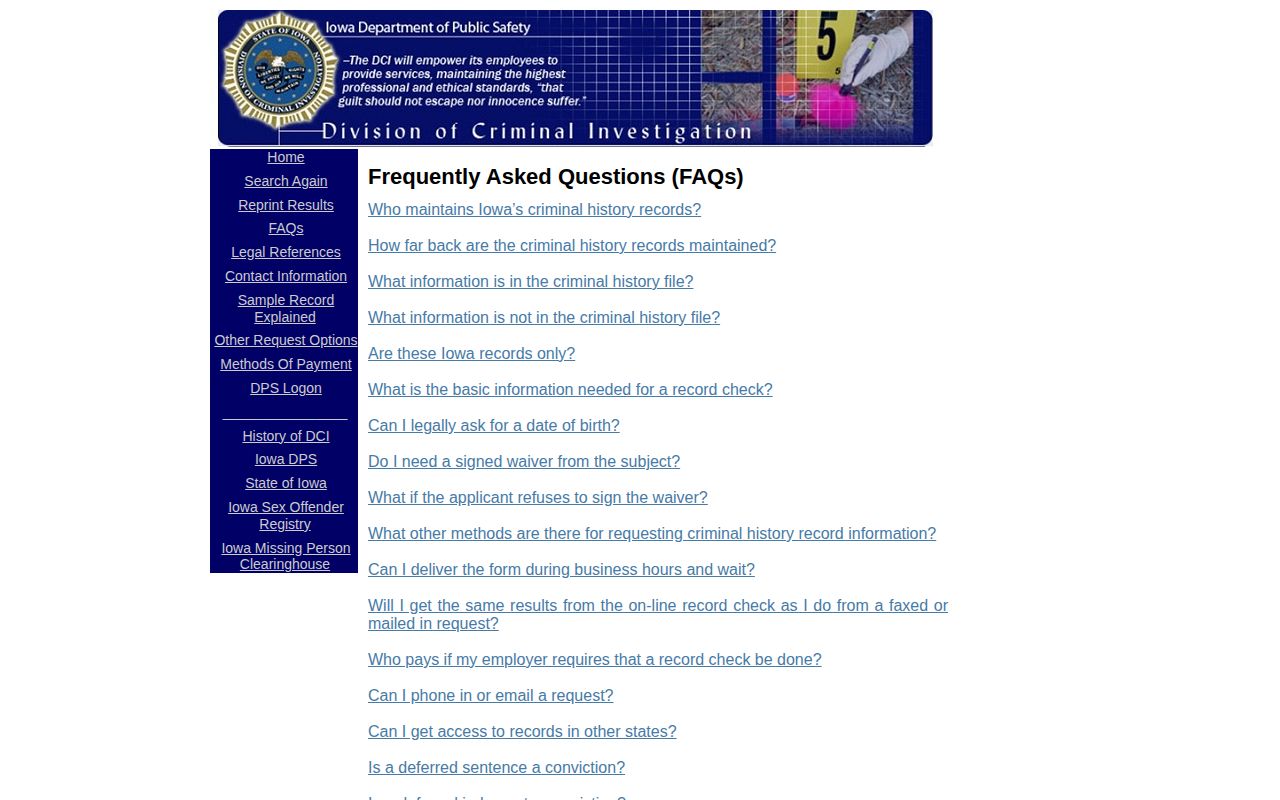
The Iowa Division of Criminal Investigation runs the central repository. Its rules govern how old arrest data ages out. History is generally kept until age 80 or death. Arrest entries lacking a disposition fall under a four-year purge rule. The agency's FAQ describes it. A public waiver search may omit an arrest older than 18 months with no disposition. Simple misdemeanors are treated differently. They bind the repository, not county rosters. The DCI's own notice helps separate a central-history result from a jail booking record. It also helps separate that result from a court outcome.
After a source page changes or disappears, a search engine may still show an old result. Its current outdated-content tool can refresh the index, but it cannot order an agency or publisher to change a live record.
For older government material, the State Archives can help identify a record group and series. Its copy-request page lists example fees of 25 cents for a standard letter-size copy, 50 cents for a larger copy, and $2.75 for a certified photocopy. Ask the research center about current cost and timing; permanent archival custody does not make every record immediately public.
The State Archives copy and image request page describes how to request a scan or certified paper copy of a historical record.
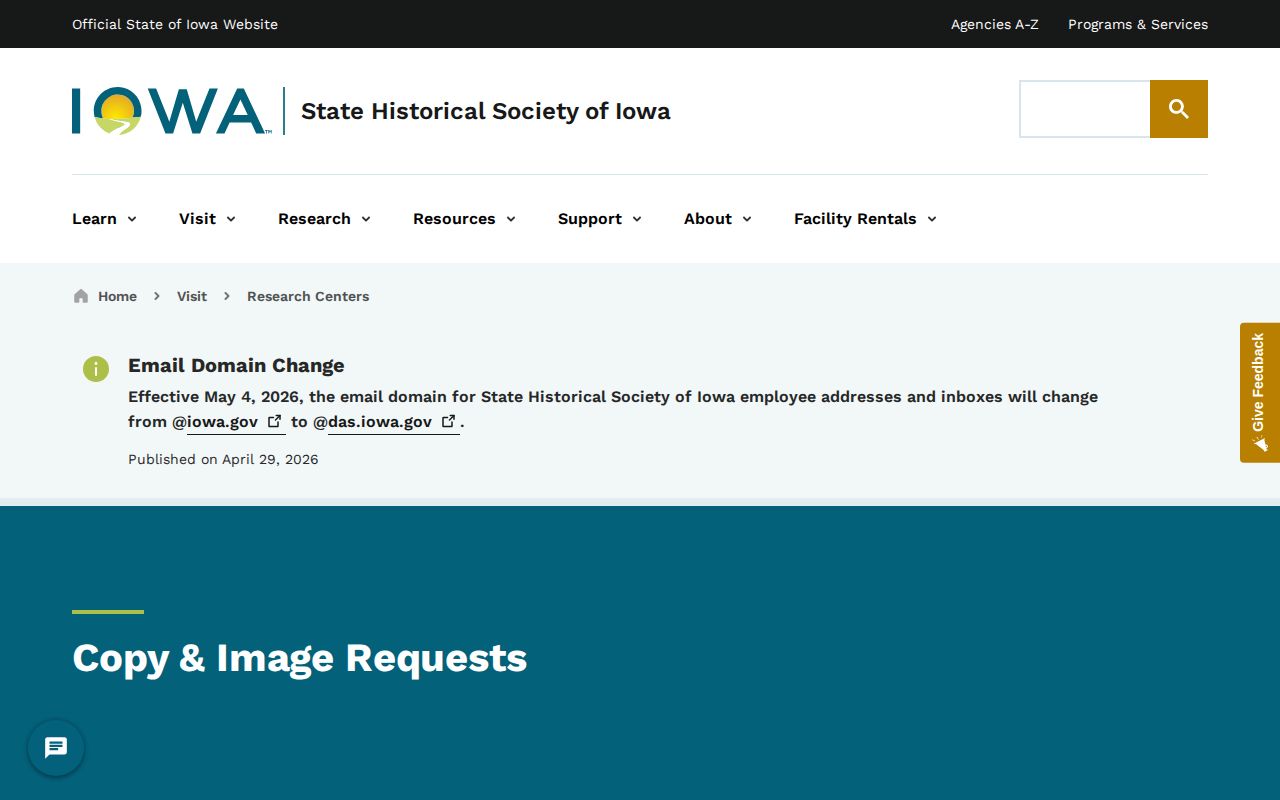
A historical register is not a live arrest log. Archival records can carry privacy limits. Give the archive a name, an approximate date, the county or institution, and any record-group clue you already have.
Free Corrections for Private Copies
Private arrest sites answer to their own rules. Iowa spells out no single removal form or deadline that covers them all. That means a booking photo can sit on one page. The court file may tell a different story. Always check an entry against the record held by the official custodian. Some publishers offer a free request path, though each sets its own proof requirements. A good correction request names the exact page and states plainly what is wrong. Attach a court order or an official outcome paper whenever one exists. Busted Newspaper's form wants identity and contact details. It also wants the listing itself, a reason, and legal documents showing dismissal, acquittal, or expungement. Give it five to ten days, the site says. RecentlyBooked's policy makes qualifying requests free. It asks for the record URL, the name, the date, the location, a reason, and supporting papers. Coverage and turnaround differ by county. Mugshots.com's record-maintenance policy likewise handles removal and correction at no charge. Its stated target is about ten business days. The proof it wants depends on the situation. It could be a sealed case, an expungement, a dismissal, or a simple factual update. Other publishers work through per-listing contacts instead. Check their live pages for current fees and timing. Skip any intermediary who promises a guaranteed result. Voluntary policies are not an Iowa statutory right. Getting one site to delete a booking photo never forces another to follow. An arrest page can be accurate but missing a later dismissal or expungement. A factual update is usually the stronger ask then.
| Route | Useful proof | What it can do |
|---|---|---|
| Government custodian | Record details, date, and the legal basis for a correction. | Update its own record or explain why it retains or withholds it. |
| Court clerk or case file | Signed order or final disposition. | Confirm the official outcome and court-access status. |
| Private publisher | Exact page URL and official proof of a change or error. | Apply that publisher's own correction or removal policy. |
| Search index | Evidence the source page has changed or disappeared. | Refresh a stale search result, not the source record itself. |
Note: One publisher's correction does not update another site's copy or change a live government record.