
Iowa State Patrol Arrests
The Iowa State Patrol, or ISP, patrols the whole state. It works under the Iowa Department of Public Safety. Officers make traffic stops and arrests across Iowa. Yet the patrol runs no jail of its own. An ISP arrest therefore leaves two trails. Patrol activity sits on one side, and a county booking record sits on the other. Keep them separate. The patrol side may be an investigation or a selected DPS release. The custody side begins at the local facility that receives the person.
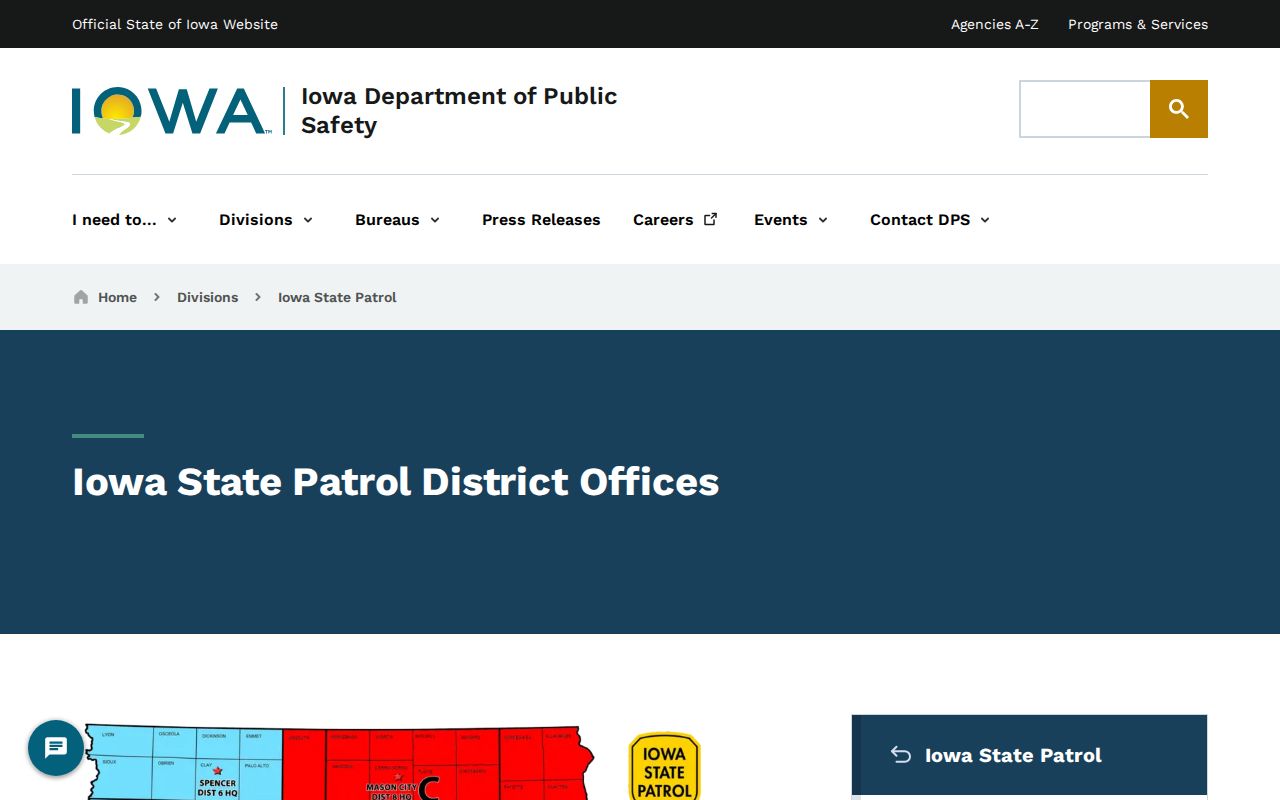
ISP also divides Iowa into geographic districts covering groups of counties, plus administrative districts. District coverage can hint at which patrol office handled an event. It will not tell you the receiving jail. The patrol's district-office listing gives the official district names and coverage. For custody, trust the county named in the release or confirmed by the agency.
Record distinction: The county jail holds the booking record. The court's docket later carries the case outcome.
Iowa State Patrol News Releases
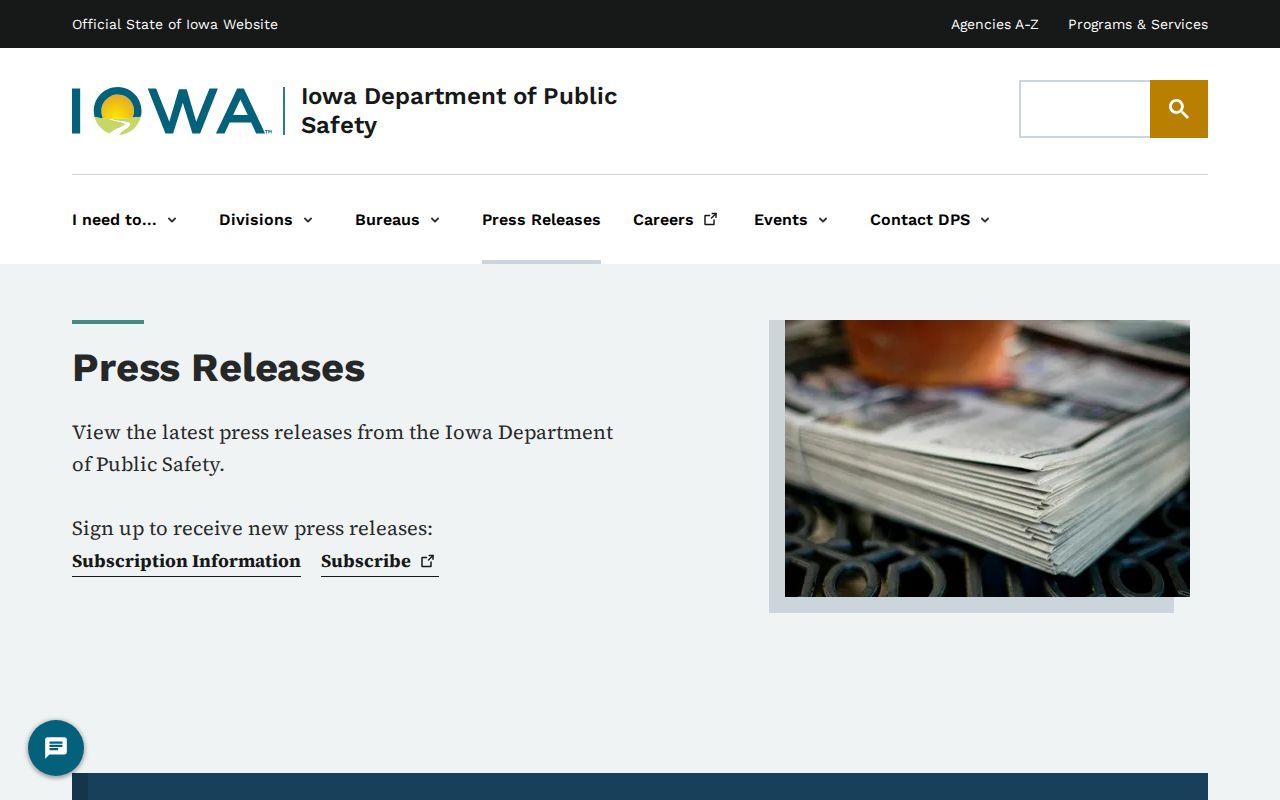
The best official starting point for patrol arrest news is the DPS press-release index. It mixes ISP items with releases from other DPS divisions. Traffic safety, investigations, training, and missing-person notices all appear there. A typical release carries a date, headline, narrative, and agency contact. Some add selected charge or custody details. Some include custody details. It is not a live booking table. Most releases carry no booking photo. The live newsroom page offers division and date filters. Those help you spot an ISP item.
A release can announce an arrest without showing who is still in custody. For current status, follow the named booking county or call its records unit.
| ISP or DPS channel | What it publishes | Limit |
|---|---|---|
| DPS Press Releases | Selected arrests, investigations, enforcement news, and public-safety updates. | Mixed divisions; not a complete daily list. |
| Iowa DPS social posts | Supplementary alerts and pointers to agency information. | Not a durable arrest archive or official booking roster. |
| DPS annual report | Yearly activity totals and agency context. | Aggregate measures, not named arrest records. |
The patrol publishes no daily arrest or dispatch log. Iowa 511 covers roads and travel, not arrests. Social posts can point to a release, but a record request belongs with the permanent report or its custodian. DPS also posts campaign notices and results. Its 2026 statewide hands-free enforcement release sums up one safety push. An earlier special-enforcement notice described joint work with local agencies. Such items explain a program or report totals. They never list every stop or every person booked. The Iowa DPS Facebook page spreads notices beyond the newsroom. Treat it as a pointer back to agency material, not an arrest archive.
Need a durable report or case detail? Follow the linked DPS release, or request the record from the agency that holds it.
How to Find an ISP Arrest
A patrol release name is only the start. Next comes the booking record. Find the agency and county that hold it. A highway location, city name, or patrol district can narrow the search. Still, the jail named in the release, or a confirmation from DPS, carries more weight; for a fresh booking, a county roster may beat waiting on a later news update.
- Search the DPS release index by the event date, location, or name if known.
- Read the release for the booking county, receiving jail, or local agency named in the account.
- Open that county's official roster and check its date, custody window, and photo policy.
- If no booking appears, call the county jail or ask DPS which custodian received the person.
The Iowa County Directory routes you to each county's local arrest site. A fresh booking may not be posted yet. People also leave custody between roster refreshes. The statewide 24 Hour Arrests landscape explains how same-day county pages differ. The Iowa Arrest Log covers broader activity and news windows. Court dockets come later. Once a case is filed, the docket tracks each new filing.
Where Iowa State Patrol Arrestees Book
ISP has no jail and no statewide holding roster. A person the patrol arrests goes to a receiving county jail or another local facility. Which one depends on the circumstances. The Centerville release names Appanoose County Jail. The Sergeant Smith case update names Black Hawk County Jail. Those two show the routing pattern, not a full list of facilities, and a transfer can still happen later.
Once the booking county is known, its sheriff or jail holds the local booking entry and any photo it chooses to publish. A county roster shows current custody. A booking record can remain available after release. If the person moves to state custody after sentencing, the Iowa Department of Corrections Offender Search serves as a separate post-sentencing check. That tool is not for a new county booking.
Note: The ISP district that handled a stop and the county that holds a booking are related details, but they are not always the same search key.
Request Iowa State Patrol Arrest Records
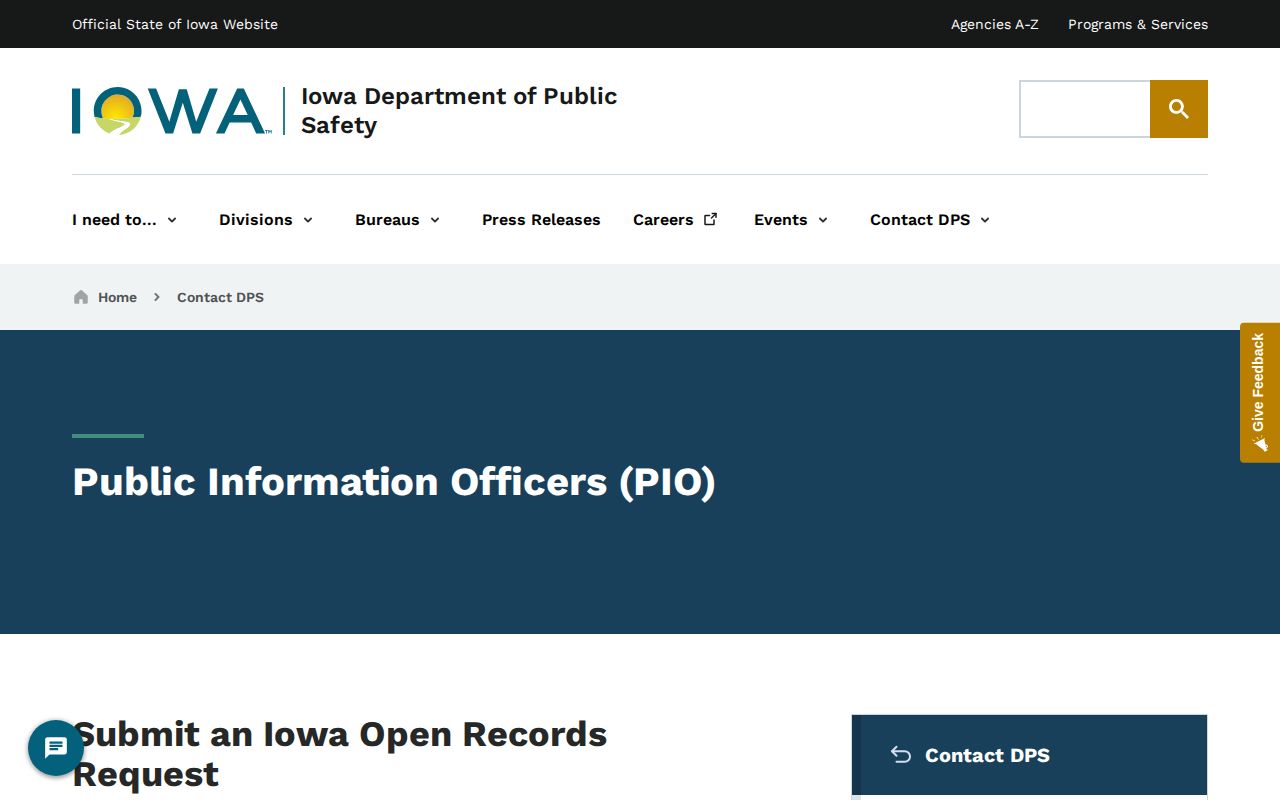
Iowa State Patrol files travel through the DPS Public Information Officers and open-records page. Send incident, arrest, or investigative record requests to openrecords@dps.state.ia.us. Include the date, road, and post involved so staff can find the event. A press release is a starting point. It is not the whole file. The Iowa crash-report portal sells collision reports only. Booking photos and investigative files come through Iowa Code Chapter 22 instead.
Fees follow DPS policy, not one statewide rate. The first three labor hours and first three attorney hours are free. Work beyond that is billed at actual hourly cost. Expect an advance deposit when the estimate tops $250. County jails set their own fees, so this schedule does not travel with them. Chapter 22 gives no fixed turnaround for ISP records. Active cases can be withheld. Juvenile details and confidential sources can be redacted too.
The DPS request page displays the current submission route and fee rules. Check it before mailing anything.
- State that the request is for a public record under Iowa Code Chapter 22.
- Give the incident date, highway or location, person's name if known, and report number if available.
- Name the record type, such as an arrest report, incident report, or public statement.
- Ask for a fee and timing estimate, a segregable copy, and the legal reason for each withheld part.
No fixed timeline applies to every request. DPS may need to clarify scope, search several custodians, review an active case, redact protected material, or release records in stages. Ask the Public Information Officer for the next update and expected timing.
Iowa ISP Traffic Arrest Results
The DPS annual report puts scale around the patrol work behind selected arrest releases. In FY2025 it counts 270,649 ISP traffic stops. It also lists 94,278 speeding citations and 1,561 impaired-driver arrests. Other figures include 4,557 crashes investigated, 12,360 motorists assisted, roughly 24 million patrol miles, and 210 traffic fatalities investigated that fiscal year. These are activity totals for one year. They are not a searchable list of named arrestees. Nor do they show any county jail's current population.
Special enforcement notices work differently. They may announce planned traffic or impaired-driving work with local agencies, then publish results after the event. Those results often report totals instead of every person's booking details. Keep the record types straight. An annual total, a press release, and an arrest record are distinct things. When a release identifies a specific county booking, follow that county's records route for the underlying intake record.
The FY2025 report appears in the publication table above. Keep its fiscal-year label with any quoted total. A future report may use a new period or a different method, so year-to-year comparisons need the source note and the same measure.
Iowa State Patrol District Coverage
ISP districts cover groups of Iowa counties and sit alongside administrative districts. That structure helps route questions about the patrol's own activity. It does not replace a booking-county search. A patrol district page may name offices or local coverage. The jail record belongs to the receiving county. The district list helps most when the arresting post or road location is known. The public release is not always listed.
The district listing is the source for Iowa's patrol geography. It shows no daily dispatch log. Nor does it track a county's roster cadence.
Older state-police paper trails live elsewhere. The Iowa State Archives holds Public Safety material in Record Group 075, historical government records rather than a current arrest feed. Its Record Group 075 description explains the collections and their scope.
Note: A district boundary can guide an agency question, while the receiving county remains the key for a jail booking or photo.
Iowa Arrest Charges and Court Outcomes
An Iowa arrest release is a snapshot from one agency. It lists charges as reported at booking. Those counts can shift as prosecutors review the case. Anyone tracking the outcome should open Iowa Courts Online and follow the docket entries for the full picture.
Scope matters too. ISP keeps incident and investigative reports, while county jails keep booking and custody data. Each arrest record request must go to the office that actually holds it. A name missing from one public screen does not mean no report exists. A news story is never the final word on a case.
Custody can move after sentencing. A person sent to state custody transfers into the DOC record system. A federal or immigration hold follows a federal custodian instead. Neither path erases the original county booking entry. The statewide index shows how to separate these arrest record layers. It routes each search to the right office.